
CHARACTERISTICS OF HUSKIES
From their legendary endurance to their playful, pack-loving nature, huskies are truly one of a kind. On this page, you’ll uncover facts and key characteristics that make these Arctic dogs so special, both as athletes and as companions.
Our experienced local guides are true husky experts. We work with these dogs every day and are always happy to share honest advice, answer your questions, and help you choose the best husky experience for you in Levi.
Have questions? Ask our experts - we’re here to help you make the right choice.
A Husky’s Life From Puppy to Arctic Legend
A husky’s journey is carefully shaped to respect both their well-being and their instincts. From their very first days to a well-earned retirement, every stage of a husky’s life has a purpose.
Most huskies are born during the summer, a quieter season that allows plenty of time for attentive care, bonding, and healthy development. As puppies, they focus on what matters most: socializing with other dogs and people, exploring their surroundings, and enjoying a free, playful puppy life.
As winter approaches, young huskies begin to meet guests and gently learn the basics - walking with a harness and lead, building confidence, and understanding routine.
Between 6 and 12 months of age, they may be introduced to sled pulling, depending on the kennel’s philosophy and the individual dog’s readiness.
From around one to two years old, a husky experiences their first full season as a working sled dog. Over time, they continue to grow both physically and mentally, learning different positions within the team, responding to voice commands, and developing the strong cooperation sled dogs are known for.
After years of active work, huskies typically retire around the age of ten, though this varies from dog to dog. Retirement means a slower pace, plenty of care, and the comfort they’ve earned - still part of the pack, just enjoying life in a different rhythm.
This thoughtful lifecycle is what helps huskies remain happy, healthy, and eager partners in Arctic adventures.
Seasons Through a Husky’s Eyes
A husky’s year follows the rhythm of the Arctic seasons.
Summer is a time to relax. Dogs enjoy free running in groups and light training such as dog-walker sessions or cart and ATV runs during cooler temperatures.
As autumn arrives, the focus shifts to dryland mushing, helping huskies gradually build strength and fitness for the winter ahead, typically over distances of 2-20 km.
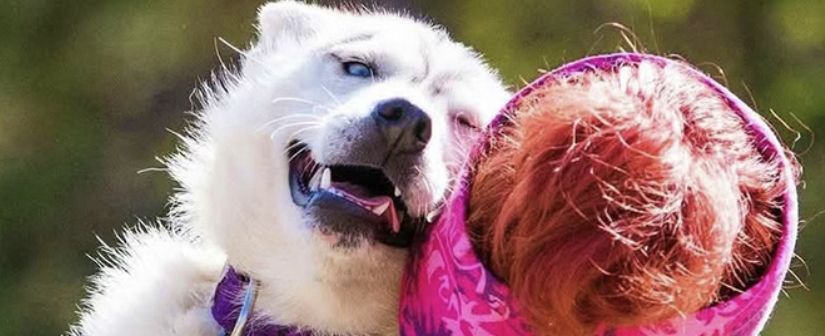
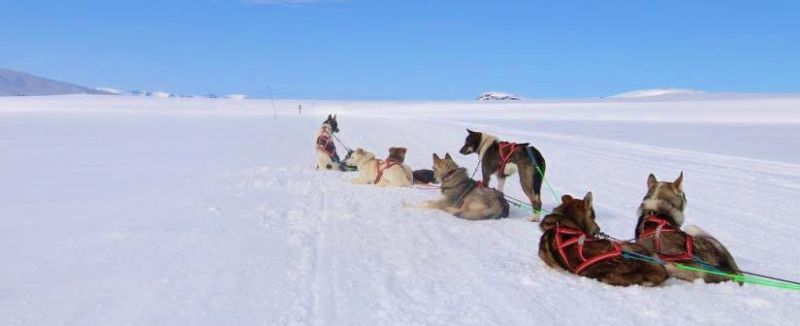
Winter is when huskies truly shine. This is the main sledding season, with day trips ranging from 2 to 40 km. Teams usually consist of 4 to 16 dogs, depending on snow conditions, sled type, and whether it’s a couple, solo rider, or a family sled.
When spring comes, the atmosphere becomes playful again - fun trips, reinforcing voice commands, and sometimes longer multi-day expeditions or even races, depending on the dogs and the season.
Siberian vs Alaskan Huskies
Siberian Huskies
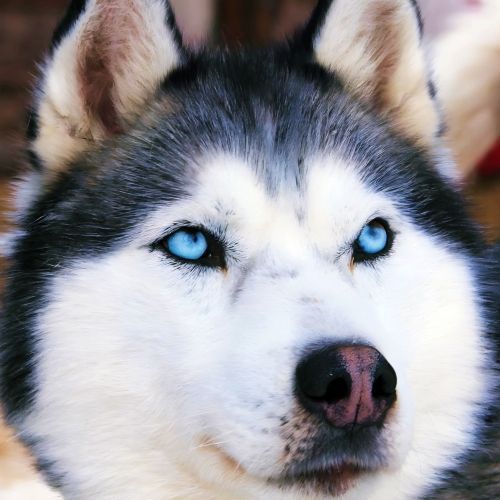
Siberian Huskies (pure-bred dog with defined appearance and temperament).
- Males: 53-60cm, 20-27kg
- Females: 51-56cm, 16-23kg
- Litter size: 4-8 puppies
- Average lifespan: 12-14 years
The Siberian Husky is a medium-sized working dog breed that originated in north-eastern Siberia, Russia. It is thought that the term “husky” is a corruption of the nickname “Esky” once applied to the Eskimo and subsequently to their dogs. The breed belongs to the Spitz genetic family.
The original Siberian Huskies were bred by the Chukchi people (who have their roots from Eskimos), whose hunter-gatherer culture relied on their help. It is an active, energetic, resilient breed, whose ancestors lived in the extremely cold and harsh environment of the Siberian Arctic. It is a great helper and a sled dog.
A Siberian Husky’s coat is thicker than that of most other dog breeds. It is able to withstand temperatures as low as −50 to −60 °C. Siberian Huskies come in a variety of colors and patterns. Eyes may be brown or blue or black.
Siberians are not as lean as Alaskan Huskies, with a tendency to be built more like bodybuilders. Strong, steady, but not as fast over long distances;
Our current climate (even up here in the Arctic) favors thinner coats, Siberians with thick coats are more prone to overheating in warmer temperatures.
Alaskan Huskies
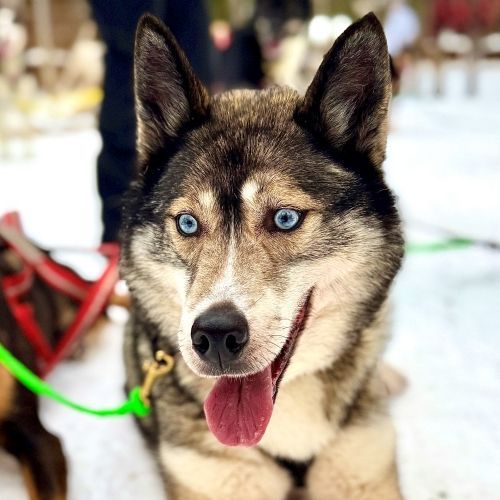
Alaskan Huskies (mixed-breed dog bred for performance and varies greatly in appearance):
- Males: 58-66cm, 18-27kg
- Females: 50-64cm, 16-23kg
- Litter size: 4-6 puppies
- Average lifespan: 12-14 years
- Speed: 18-20 km/hr in long distance and at 30 km/hr when sprinting.
As the name suggests, this type of husky originated in Alaska. Mushers wanted to breed a fast, athletic, healthy dog that could run long distances efficiently. Over many generations, the Siberian husky was cross-bred with German short-haired pointers, greyhounds, and other Northern breeds to create what we call the Alaskan husky. This is why they can have brown or blue eyes, different colored coats, pointy or floppy ears, and come in different shapes and sizes.
Bred for its purpose as a working sled dog, the main qualities that characterize the Alaskan husky are:
• Motivation to run (eagerness paired with endurance)
• Agile body structure (lean and tall with long legs – marathon runner, not body builder!)
• Appetite
• Good coat (varied thickness according to purpose, climate)
• Friendly nature towards other dogs and people
The Alaskan husky is the sled dog of choice for world-class dog sled racing. Usually, sprint-racings are won by teams of Alaskan huskies. Winning sprint racing speeds often average more than 31 km/h over three days; racing at 32 to 48 km each day.
Today, Alaskan huskies are generally preferred as working and racing sled dogs over Siberian huskies. This is partly because the modern breed lineages of most purebred Siberians are better suited to the purposes of dog shows and household pets. It is difficult to find working lineages of the Siberian that compare to the efficiency, health, and work ethic of the Alaskan husky.
DOG TEAM MEMBERS
Dog team members are given titles according to their position in the team relative to the sled. These include leaders or lead dogs, swing dogs, team dogs, and wheelers or wheel dogs.
Lead dogs steer the rest of the team and set the pace. Leaders may be single or double. Qualities for a good lead dog are intelligence, initiative, common sense, and the ability to find a trail in bad conditions.
Swing dogs or point dogs are directly behind the leader. They swing the rest of the team behind them in turns or curves on the trail.
Team dogs are those between the wheelers and the swing dogs and add power to the team. A small team may not have dogs in this position. Alternatively, the term may be used to describe any dog in a dog team.
Wheel dogs are those nearest the sled and musher, and a good wheeler must have a relatively calm temperament so as not to be startled by the sled moving just behind it. Strength, steadiness, and ability to help guide the sled around tight curves are qualities valued in “wheelers”.
INTERESTING FACTS ABOUT HUSKIES
Huskies are born to run
When the semi-nomadic Chukchi people of Siberia had to expand their hunting grounds some 3000 years ago, they sought to breed the ideal sled dog. These dogs had to have endurance, a high tolerance to cold, and the ability to survive on very little food. The resulting pups could carry (heavy) loads over long distances without food or warmth. While there is controversy as to how pure the lineage is, Siberian huskies are widely believed to be the closest to the original Chukchi dogs.
Features that keep them warm
Huskies have a thick double coat that keeps them well insulated. Their undercoat is short and warm, while the overcoat is long and water-resistant. Their almond-shaped eyes allow them to squint to keep out the snow. Huskies will wrap their tails around their faces while they sleep; their breath warms the tail and keeps the nose and face protected from the cold.
They are not great watch dogs
Huskies are not one-person dogs - they're unsuspicious and friendly to strangers. This can be charming, but it's not very helpful when you’re looking for a watchdog.
Huskies are amazing family dogs. Because they are predisposed to packs and that sort of lifestyle, they are incredibly loyal (not necessarily to one person though) and are very clingy. They love, love, love their owners. They also have a natural affinity for kids and are super gentle, playful, and kind. Even as they grow, they are smart enough to recognize their size compared to that of a baby, and adjust their behaviors accordingly.
Huskies do not get fatigued
Huskies often run long distances on very little food. When humans attempt this, we start to use our body’s glycogen and fat and eventually get fatigued. But huskies burn a lot of calories without ever tapping into these other energy stores - and they do this by regulating their metabolism.
Houdini´s
These husky pups love to run and explore. They're known to be escape artists and are capable of digging under fences and slipping out of leashes.
Close relation to wolves
Studies say that the shiba inu and the chow chow share the most DNA with the grey wolf. Coming in near the top is the Siberian husky. That said, huskies are domesticated dogs and have evolved separately from their wild cousins for thousands of years.
Distinctive blue eyes
Not many dog breeds can boast piercing blue eyes. Some dogs, like the Australian shepherd or Weimaraner, have them thanks to the merle gene, which results in the loss of pigmentation. But huskies can have bright eyes without that gene.
Calorie burners
Every racing sled dog consumes roughly 10-12,000 calories daily, the equivalent of 24 McDonald’s Big Macs. Yet they weigh only about 18-27 kilograms. That makes sled dogs powerful calorie burners; in contrast, human athletes struggle to put away more than 5,000 calories in one day despite weighing roughly three times as much as a racing sled dog.