
SNOW IN LEVI, FINLAND
First flakes. Deep winter. Blue twilight. Find the right weeks for the snow holiday you have in mind with ten seasons of nearby weather observations and advice from our local team.
THE SHORT ANSWER
Come for the winter you want to experience.
If husky rides, snowmobile trails, and time in the snow are the heart of your trip, we recommend planning for
mid-December to mid-March. For a balance of established snow and longer days, we particularly like
mid-February to mid-March. For the deep-blue atmosphere of kaamos and Polar Night, look at
December and January.
Mid-Dec → mid-Mar
Our preferred window for a holiday built around snow activities: husky, snowmobile safaris, igloo building, skiing.
Dec & Jan
Our favourite months for the Blue Moment atmosphere at Polarman’s Camp.
Late Feb → mid-Mar
A local recommendation for snow adventures with more daylight.
These are STG planning recommendations, not weather guarantees or fixed opening dates. Every programme depends on its own operating conditions.
10 COMPLETED WINTERS · 2016/17–2025/26
The first snow is only the beginning of the story
A white morning in October does not tell you when the safari season will begin. We analysed daily snow-depth observations at Kittilä Pakatti, a nearby regional station, to separate the first recorded cover from the longest uninterrupted snow period.
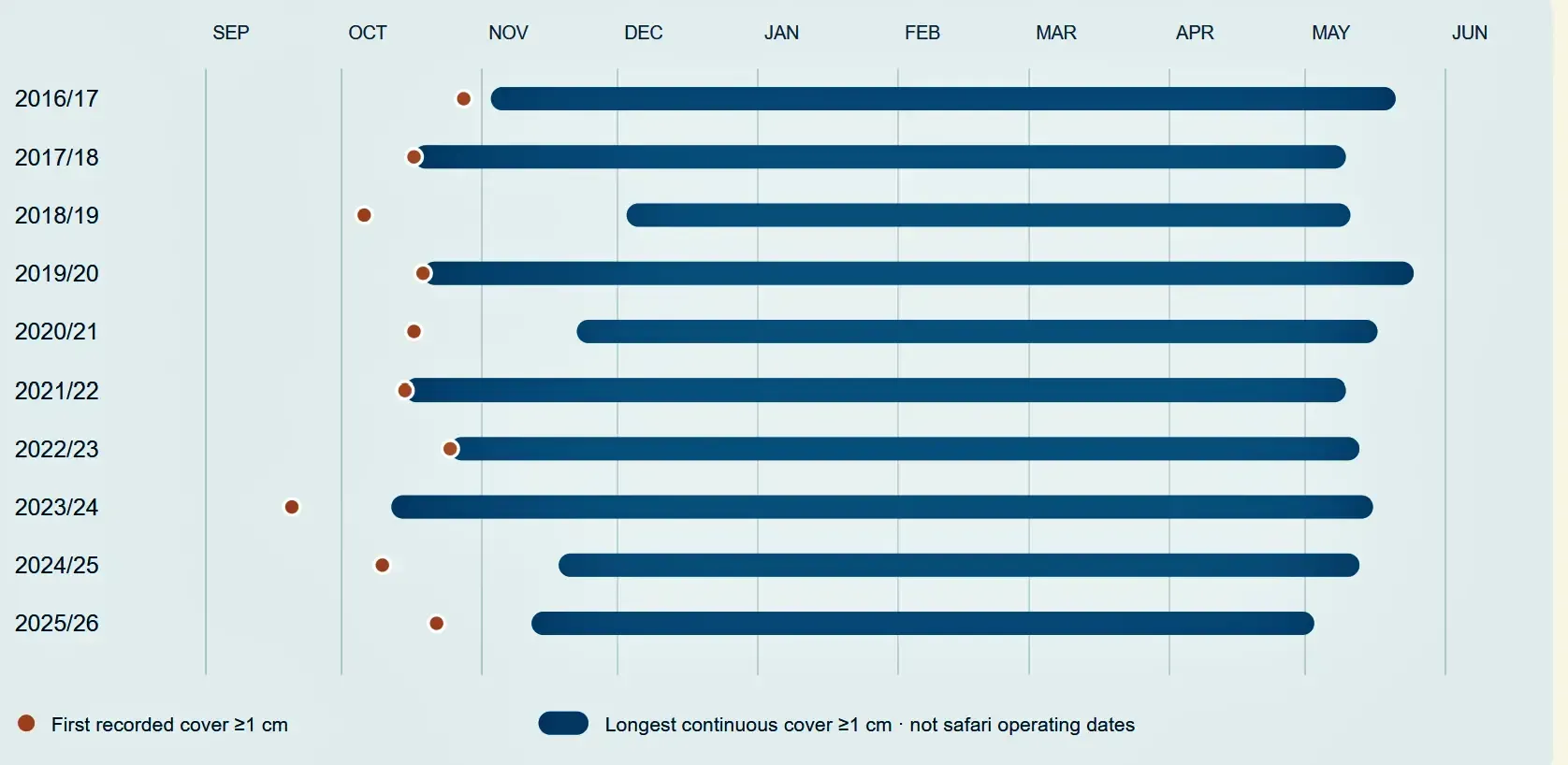
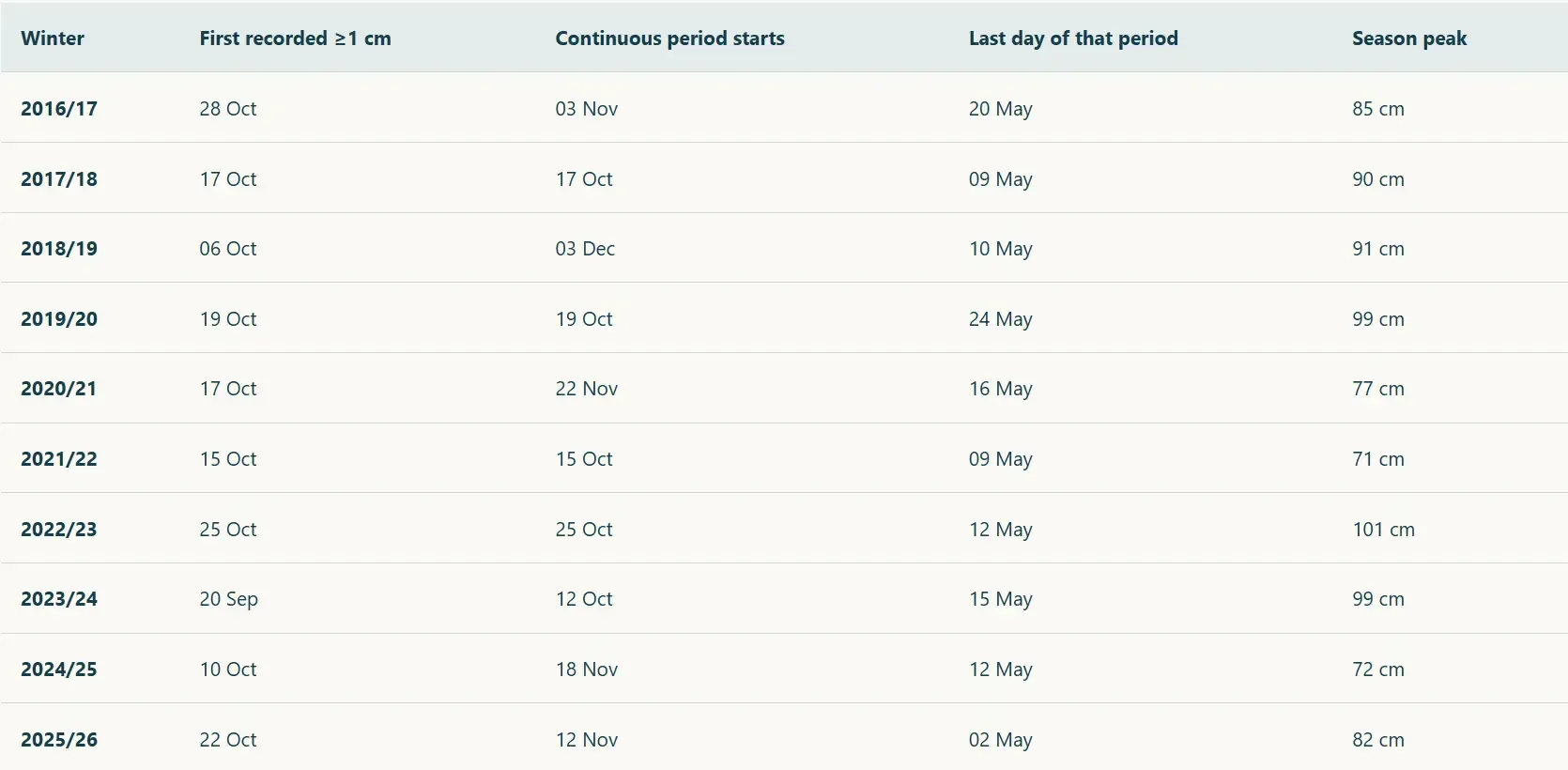
The chart below shows snow cover in Levi. Dots mark the first recorded day with at least 1 cm of snow; bars show the longest continuous period with at least 1 cm of snow. Each bar ends immediately after the last qualifying day. These dates are based on our calculations using FMI observations and are not official FMI snow-season dates.
Please note that at the beginning and end of the snow season, the snow cover can be very thin, and conditions may be unsuitable for snow activities. However, there may still be enough snow for some snow play.
Regional snow observations - Kittilä Pakatti
How much snow was there?
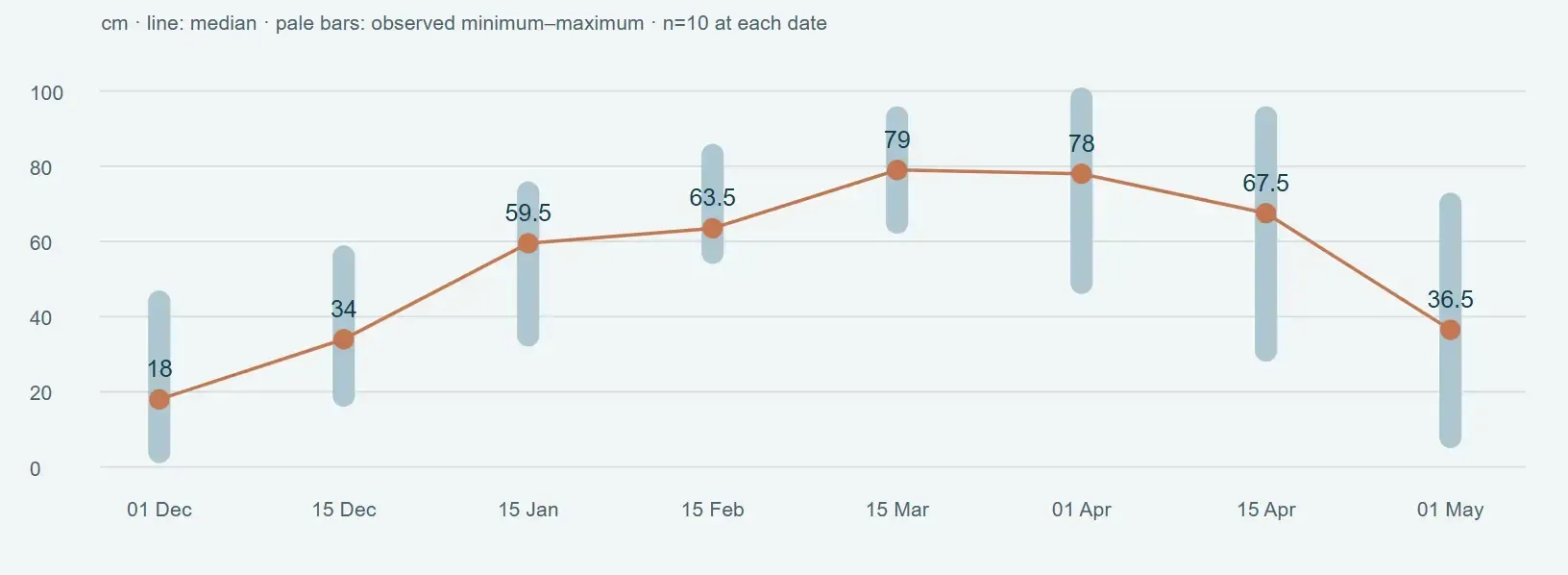
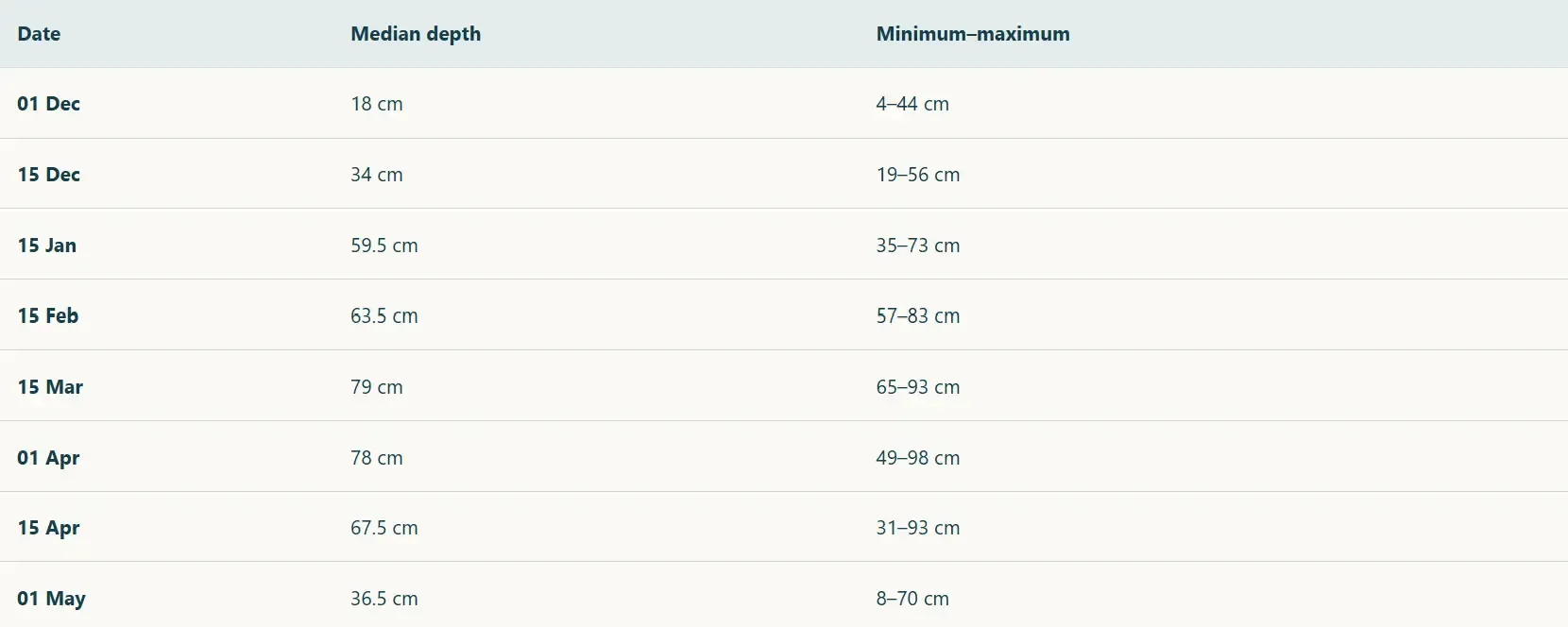
The median depth on 15 March was 79 cm, compared with 63.5 cm on 15 February. On 15 April, all 10 seasons still had at least 31 cm at this station. That says something about the seasonal snowpack but nothing on its own about slush in the village or the condition of an individual safari route.
exact snow-depth values
Ten-season median and full observed range, at selected dates.
Three questions to ask before booking
- Is there snow on the ground?
- Is there enough usable snow for this activity?
- Is the specific route open and in good condition?
These are three different questions.
Levi, month by month
November
Early winter, open plans
Winter may arrive beautifully or keep you waiting. If dog sledding or snowmobiling is the main reason for your trip, choose later dates. First snow photos and an open ski slope do not confirm that natural safari trails are ready.
December
Christmas light, growing snow
The first half of December can still be a transition. From mid-December, our preferred safari window begins; late December is also our preferred start for snow building. Kaamos brings a short, atmospheric window of twilight, with time for warm indoor breaks.
January
Blue light & a quieter forest
A strong choice for a winter atmosphere, snow activities and the blue-light experience at Polarman’s Camp. The polar night ends in early January, but winter twilight continues. Allow for very cold days: a short outing can suit children better than a long safari.
February
Room to play
A favourite for families combining established snow, returning daylight and time outdoors. Plan snow angels, digging and easy forest adventures, with warm-up breaks. Snow depth may continue increasing into March or April; February is not automatically the annual maximum.
March
Deep snow, longer days
Our preferred all-round balance is late February to mid-March: time on the trails, daylight for photos and a substantial seasonal snowpack. Early to mid-March also fits our recommended igloo-building window. Later in March, check route conditions directly rather than assuming every winter activity is unchanged.
April
Spring snow, with a different feel
There can still be plenty of snow in the surrounding landscape while roads, pavements and sunny areas turn wet. Freeze-thaw changes the surface through the day. April can suit spring skiing and bright snow views, but it is not our first recommendation for a trip built around snow activities.
The weather behind the seasons
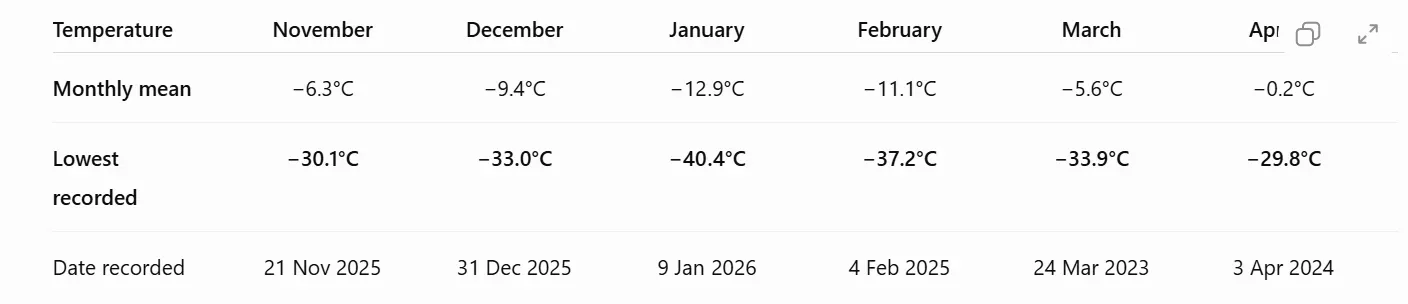
Temperature overview · Kittilä Pakatti · 10 winter seasons, 2016/17–2025/26.
Mean temperatures describe the overall seasonal pattern. The lowest recorded temperatures are individual extremes observed during these ten winters, not typical daily conditions or all-time records. Conditions at your accommodation or activity location may differ.
Source: Finnish Meteorological Institute daily observations; calculations for this guide. Monthly means are based on daily mean temperatures. Lowest values are individual extremes within these ten seasons, not typical conditions or all-time records.
SNOW IS THE SETTING. LIGHT CHANGES EVERYTHING
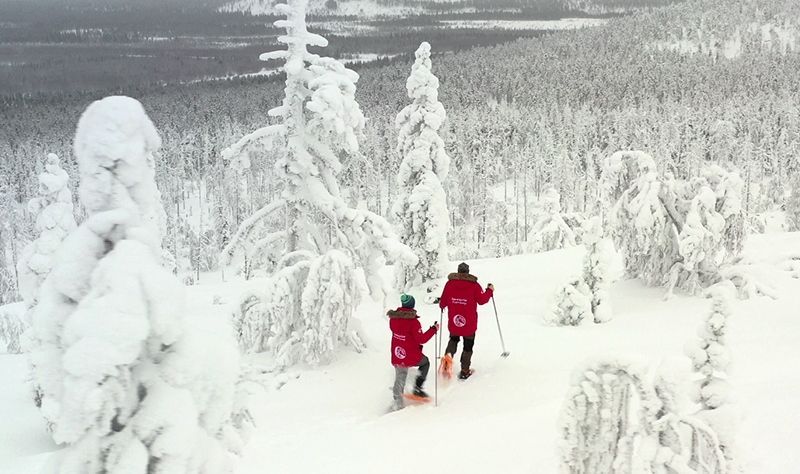
snow-covered forest in your photos
There are 2 different things to look for: snow cover on the ground and snow or rime clinging to the trees. The ground can stay white after wind or a thaw has cleared the branches.
For a photo-focused winter trip, our suggested window is January to early March, with December especially attractive for twilight. Check recent images from the actual location: the fell and the valley can look very different on the same day.
This is a local planning suggestion, not a measured probability of snowy trees. Heavy tree coatings, known as tykky, depend on moisture, temperature and wind, as well as location.
Blue Moment & kaamos
Polar night does not mean a completely black day. Around the middle of the day there can be a window of twilight. In Levi the polar night falls in December and ends in early January; the wider blue-light season lasts longer.
The Blue Moment is twilight, not a clear-night phenomenon. Its timing moves with the season. Choose your departure for the actual date; clear or partly clear conditions can make the colour more striking, but no sky colour is guaranteed.
Pink skies & soft winter light
Pink light can appear around dawn and dusk, including near midday around the polar-night period. Later in winter, sunrise and sunset move farther apart. Plan the outing around the light rather than assuming the same afternoon hour works all season.
Leave room to change the photo day. Cloud cover, visibility and wind matter, and a fresh snowfall can transform a familiar path overnight. Carry a spare phone battery and keep it warm between photos.
A WINTER YOU CAN GET YOUR HANDS INTO
For snow building, our preferred window is late December to mid-March. By then, there is usually more material to work with. On milder March days, slightly damp snow may be easier to shape than very dry powder, although a March date does not promise mild weather.
Our snow igloo programme uses the quinzhee approach: a piled snow mound that is compacted, allowed to settle and hollowed out. Cold snow can still be used with the right technique. The guide selects the method and site for the day’s conditions.
For children, leave some unscheduled snow time too. February and early March are our suggested family window for a balance of snow and daylight. Build, dig, make angels, then head inside before cold hands end the fun.
BEFORE YOU SET OFF
History helps you choose. Current conditions help you pack
Planning months ahead?
Use the seasonal pattern and your priorities. A seasonal outlook cannot promise the first usable safari day or the colour of the sky on your visit.
Travelling soon?
Check the latest local forecast, recent snow observations and images from Levi. Look at temperature, wind and precipitation together rather than only the snow symbol.
Booking a specific tour?
Ask us about the current route and the actual operating plan, especially in November, early December and late March or April.
Common questions
Snow in Levi: your questions
When does the first snow fall in Levi?
It varies from year to year and from valley to fell. In the ten seasons analysed at nearby Kittilä Pakatti, first recorded snow cover of at least 1 cm ranged from 20 September to 14 November. These are measurements of snow on the ground, not the first flakes in the air.
Does the first snow mean safaris can start?
No. A thin covering can disappear, and trails need a usable base. Each operator decides when its routes are ready. Check the specific safari rather than relying on a snow photograph or the opening of a ski slope.
Is November a good time for a snow holiday?
It can be beautiful, but it is a higher-flexibility choice. If a husky ride, snowmobile safari and deep-snow play are essential, our planning recommendation is mid-December to mid-March.
Is snow guaranteed at Christmas?
No natural conditions can be guaranteed. In our ten-season station dataset, snow depth on 15 December ranged from 19 to 56 cm. That is encouraging historical context, not a guarantee of a particular route or future winter.
When does the snow melt in Levi?
The end of the longest continuous snow period at Kittilä Pakatti ranged from 2 to 24 May in the ten seasons analysed. Roads and sunny places can become wet much earlier.
Many snow activities and safaris stop operating in late March or early April, as melting snow can make the trails unsafe. Skiing, however, often continues into early May, depending on snow conditions.
Will the trees be covered in snow in March?
Possibly, but ground snow is a poor guide to branch cover. Snowfall, rime, wind, thaw and elevation affect the trees. For photo-led trips we suggest January to early March, then checking recent local images and the forecast.
Can I see the Northern Lights without snow?
Yes. Snow cover does not cause the aurora. You need a dark enough sky, suitable cloud conditions and auroral activity. There is no sighting guarantee, and spring nights get shorter.
What should I do if snow activities cannot run?
Ask about the specific programme’s change and cancellation options. A kennel visit without a sled ride, cultural visits and an aurora hunt by car may offer alternatives, subject to their own opening dates and weather. We can help you choose a flexible plan.
Let’s plan your kind of Lapland winter
Tell us when you are coming, the ages of any children and the experiences that matter most.
Our Levi team can help you choose programmes that fit the season.